
The Post-Harvest Processing Dilemma
In the high-stakes world of commercial fruit exporting and post-harvest processing, quality control directly dictates profit margins. Fresh fruit packhouses dealing in high-value produce—such as avocados, apples, citrus, cherries, blueberries, dates, and mangoes—are facing unprecedented challenges: escalating global labor costs, strict buyer specifications from retail chains, and unpredictable climate impacts on fruit appearance and internal quality.
For packhouse managers, enterprise owners, and commercial processors, a critical business decision emerges: AI vs Traditional Fruit Sorting: Which Is Better?
Should your facility continue relying on legacy mechanical graders and manual hand-sorting lines, or is it time to upgrade to an intelligent AI-powered optical sorting line?
In this comprehensive guide, we evaluate both approaches across key commercial metrics: grading precision, throughput speed, product giveaway reduction, operational labor costs, and overall Return on Investment (ROI).-GELGOOG Fruit & Vegetable Sorting Solutions
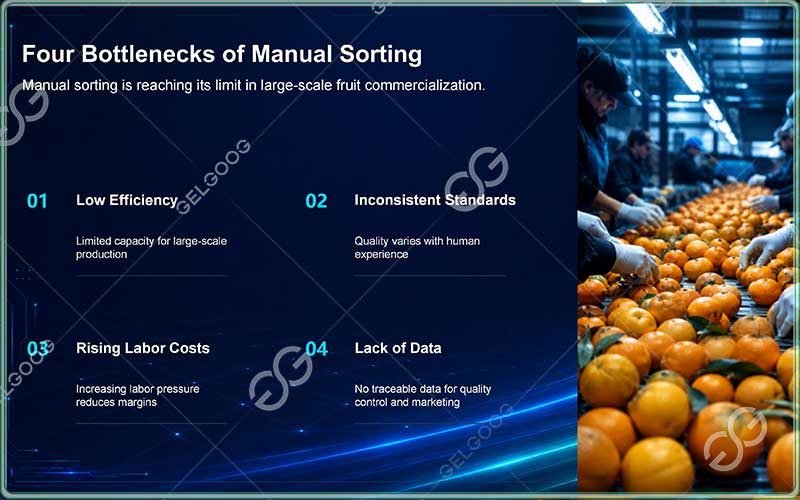
1.AI Vision Fruit Sorters Explained
To evaluate the business impact of modern AI fruit sorters, we must translate technical hardware specifications into practical economic benefits for packhouse operations.
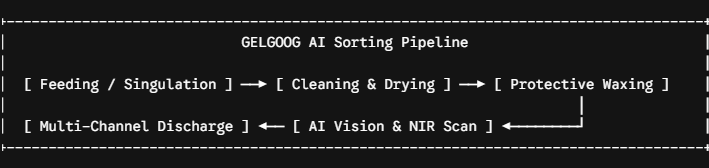
Core Parameters vs. Real Business Benefits
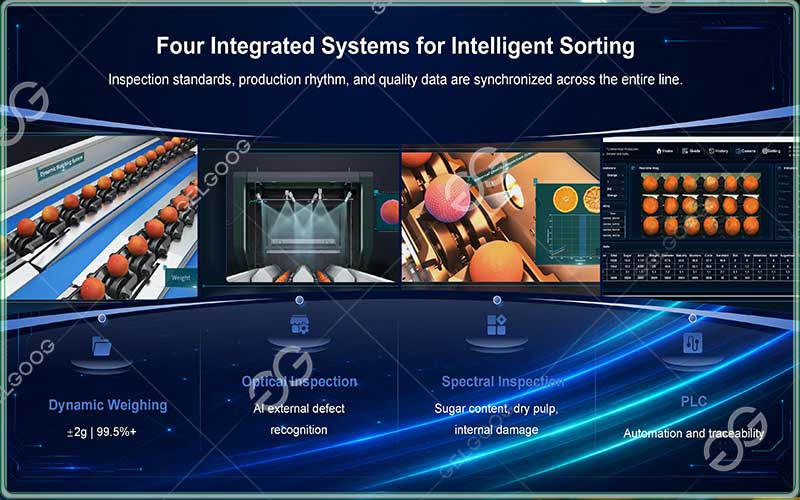
- 360° Multi-Angle HD RGB Cameras
- What it does: Captures high-resolution, multi-angle images of each fruit as it rotates on the conveyer line.
- Business Benefit: Identifies micro-bruises, skin blemishes, insect bites, and subtle color variations instantly with 99%+ accuracy. It stops defective fruit before expensive packaging and export freight costs are incurred.
- Near-Infrared (NIR) & Multi-Spectral Sensors
- What it does: Non-destructively penetrates the skin of the fruit using specific light wavelengths.
- Business Benefit: Measures internal sugar levels (Brix), dry matter, maturity stages, and internal decay/browning without damaging or cutting open a single fruit. This enables packhouses to group fruit by sweetness and shelf-life, securing premium pricing in high-end retail markets.
- Adaptive AI Deep Learning Algorithms
- What it does: Replaces traditional, rigid rule-based vision systems with neural networks trained on vast datasets of fruit defects.
- Business Benefit: Reduces false reject rates by up to 40%. Natural skin tone shifts or harmless surface variations on produce no longer cause good fruit to be thrown away or downgraded accidentally.
- Gentle Multi-Lane Singulation & Discharge
- What it does: Automatically separates bulk incoming fruit into single lanes and gently transfers sorted items into designated discharge grids.
- Business Benefit: Eliminates drop damage and impact bruising on sensitive fruits like avocados, peaches, and cherries, directly protecting post-harvest shelf life.
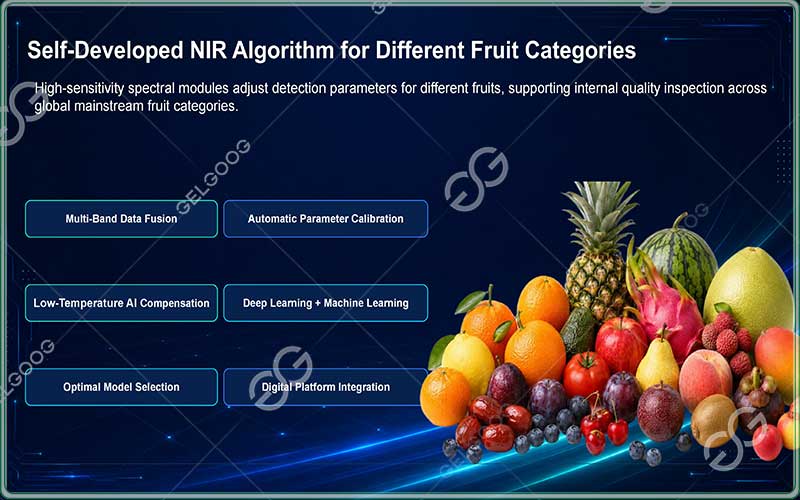
2.AI vs. Traditional Sorting: Head-to-Head Quantitative Comparison
Traditional sorting relies on physical attributes (divergent rollers, rotary screen sizers, weight-balance cups) combined with large teams of manual workers inspecting fruit by eye. While legacy systems have a lower initial equipment cost, they introduce high human error, speed bottlenecks, and significant product giveaway.
Here is how GELGOOG AI Optical Sorting Lines perform against traditional methods in quantitative packhouse metrics:
| Key Performance Indicator (KPI) | Traditional Manual / Mechanical Sorting | GELGOOG AI Optical Vision Sorting Line | Business Impact & Value |
| Grading Accuracy | 75% – 85% (Drops as workers fatigue) | 99%+ Accuracy | Zero buyer claims due to mixed fruit grades |
| Defect Detection Scope | Size & gross weight only; misses internal rot | External blemishes + Internal NIR (Brix, dry matter, internal rot) | Locks in premium export pricing for Grade-A fruit |
| Product Giveaway | High (10% – 15% loss due to manual over-grading) | −30% Reduction in giveaway | Prevents giving away top-tier fruit in lower price bins |
| Labor Requirement | 15 – 30 sorters per shift per lane | Up to 70% Reduction in manual labor | Solves seasonal labor shortages & cuts operational costs |
| Processing Speed | Limited by human visual reaction times | Continuous full-speed sorting (24/7 continuous duty) | Maximizes shift throughput during peak harvest seasons |
| False Reject Rate | High on complex surface colors | −40% Lower false rejects vs rule-based sorters | Saves good fruit from being miscategorized as waste |
| Multi-Crop Versatility | Requires mechanical hardware re-tooling | “One Model, Multiple Applications” via software profile switch | High utility across different fruit harvests year-round |
3.Real-World Applications Across Popular Fruit Categories
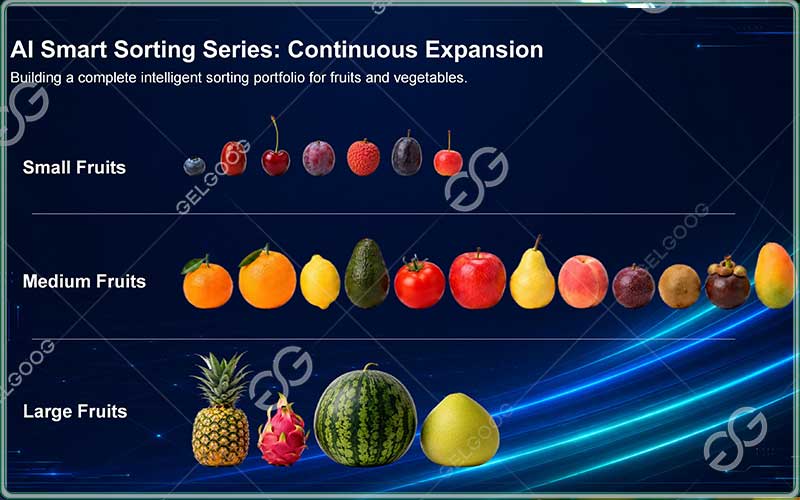
Different fruit commodities present unique sorting challenges during post-harvest handling:
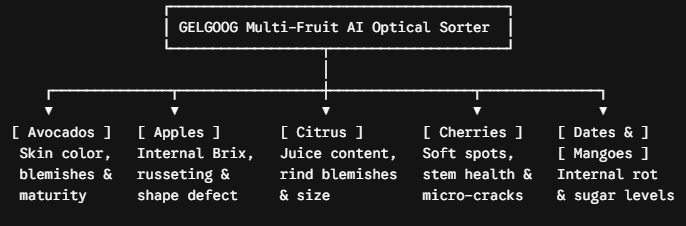
- Avocados: Avocado skin changes color naturally as it matures, making static vision sorters prone to error. GELGOOG’s AI avocado optical line evaluates skin blemishes, black spots, lenticel damage, and internal firmness/dry matter without bruising the butter-soft flesh.
- Apples & Citrus: AI algorithms grade fruit based on color uniformity, shape symmetry, stem punctures, and russeting, while integrated NIR modules check sugar content (Brix) to ensure uniform sweetness in consumer clamshell packs.
- Cherries & Blueberries: Small, delicate fruits require high frame-rate cameras to detect soft rot, pedicel damage, and surface cracks at high speeds without causing surface damage.
- Dates & Mangoes: Identifies hidden internal rot, seed cavity issues, and surface crystallization, enabling packhouses to categorize fruit for fresh retail export versus industrial processing (drying/slicing).
4.Objective Pros & Cons Analysis (Balanced Trust Analysis)
To ensure an objective business evaluation, we examine both sides of upgrading to an AI optical system:
🟢 Pros of AI Optical Sorting
- Higher Yield of Grade-A Fruit: Accurately separates premium fruit from mid-tier stock, allowing processors to capture maximum revenue per batch.
- Substantial Labor Cost Savings: Reduces human inspection staff requirements by 50%–70%, significantly lowering operating expenses.
- Operational Stability: Operates 24/7 without efficiency loss, eye fatigue, or shift turnover issues.
- Full Digital Traceability: Integrated IoT modules track defect rates and batch parameters in real time for smart factory management.
🔴 Cons & Considerations of AI Optical Sorting
- Higher Initial Capital Expenditure (CAPEX): Higher initial equipment cost compared to standard mechanical sizing tables.
- Operational Training Required: On-site operators need basic technical training to switch SKU profiles and maintain optical cleanliness.
- Infrastructure Requirements: Requires clean, dry operating environments and stable power supplies to maintain camera and sensor accuracy.
5. Commercial Value & ROI: Which Is Better for Your Facility?
When answering AI vs Traditional Fruit Sorting: Which Is Better?, the conclusion comes down to your enterprise goals:
- Traditional Mechanical/Manual Sorting is suitable if: You run a small-scale, localized seasonal facility with low volume, minimal buyer quality grading requirements, and access to low-cost manual labor.
- AI Intelligent Optical Sorting is essential if: You are an enterprise processor, packhouse owner, or exporter targeting retail chains and international markets. In high-volume operations, quality consistency, zero rejection rates, and reduced labor reliance are non-negotiable.
The Financial Verdict
While traditional sorting has a lower entry cost, AI-powered optical sorting delivers a far superior lifetime ROI. Most GELGOOG clients achieve complete payback within 12 to 18 months through a combination of:
- +15% to 25% Increase in Grade-A packout value.
- 30% Reduction in product giveaway.
- Up to 70% Savings in direct sorting labor costs.
Ready to Upgrade Your Fruit Processing Line?
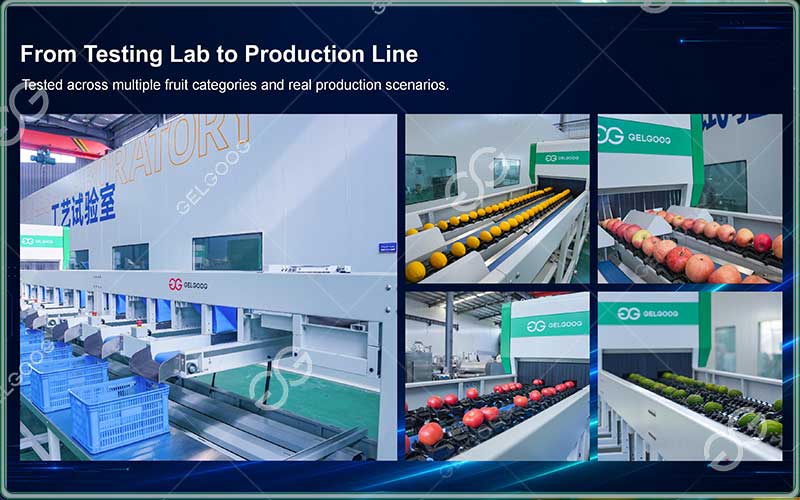
GELGOOG provides fully integrated, custom post-harvest processing lines—combining washing, drying, waxing, AI optical inspection, and automated grading into one seamless solution.