



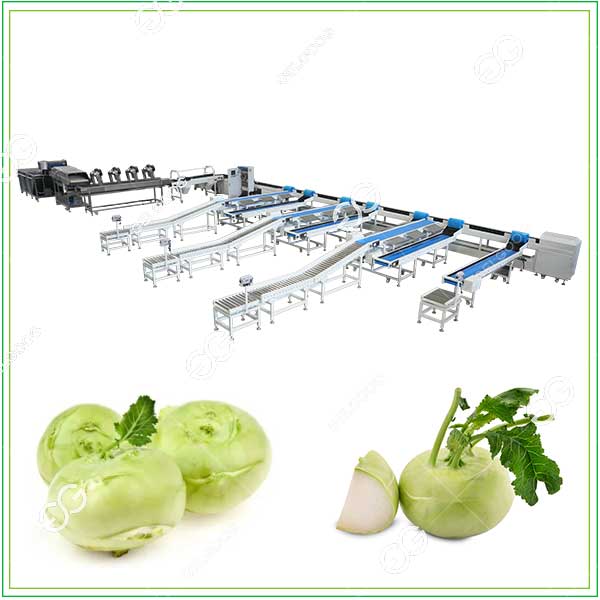
An industrial Kohlrabi (Brassica oleracea) Washing and Grading Production Line helps vegetable processors remove field dirt, inspect product quality, and sort kohlrabi into consistent commercial grades. For fresh produce packhouses, vegetable suppliers, and food processing companies, an integrated washing and grading system can improve handling efficiency and reduce manual sorting work.
The line combines vegetable washing equipment, an inspection conveyor, and an electronic weight grading machine to process kohlrabi according to specific production and market requirements. Depending on the product condition and packing needs, the system can also include air drying, collection conveyors, and packaging equipment.
What Is a Kohlrabi Washing and Grading Line?
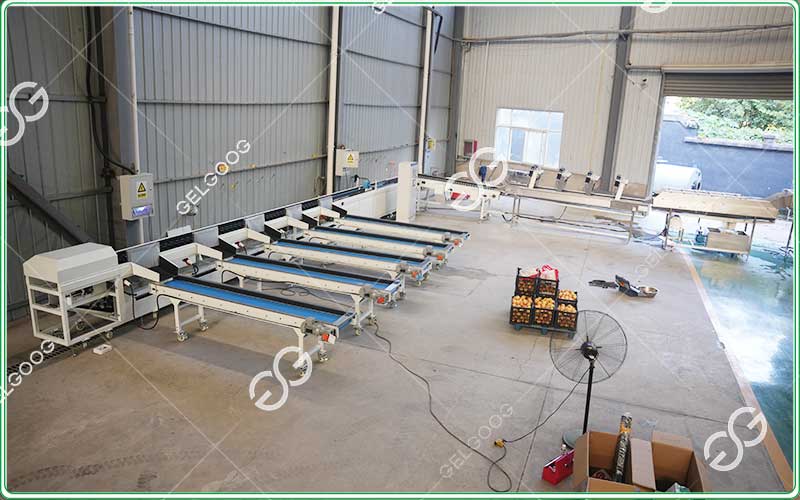
A kohlrabi washing and grading line is an industrial vegetable processing system designed to clean the enlarged edible stems and separate them into different commercial grades.
Unlike a simple vegetable washer, an integrated kohlrabi processing line combines cleaning, quality inspection, and automated grading. Its electronic weighing system measures individual product weight and directs each kohlrabi into a designated grade.
Typical applications include:
- Commercial kohlrabi washing and packing facilities
- Fresh vegetable processing plants
- Agricultural cooperatives and produce packing stations
- Vegetable exporters requiring consistent product specifications
- Wholesale suppliers serving supermarkets and food retailers
How Does the Kohlrabi Washing and Grading Production Line Work?
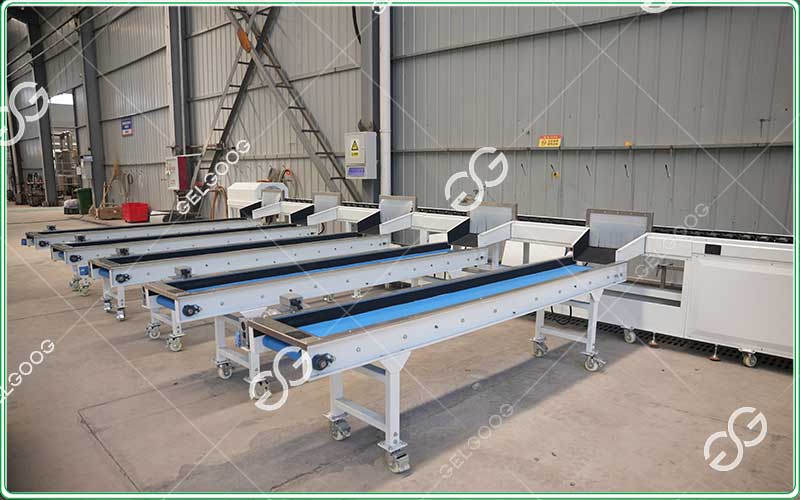
The processing sequence depends on the condition of the raw vegetables, required throughput, and final packaging specifications. A typical industrial configuration follows these steps.
Step 1: Raw Kohlrabi Feeding
A receiving hopper or feeding conveyor transfers harvested kohlrabi into the processing line. A controlled feeding system helps maintain a steady product flow and reduces unnecessary collisions.
Step 2: Industrial Kohlrabi Washing
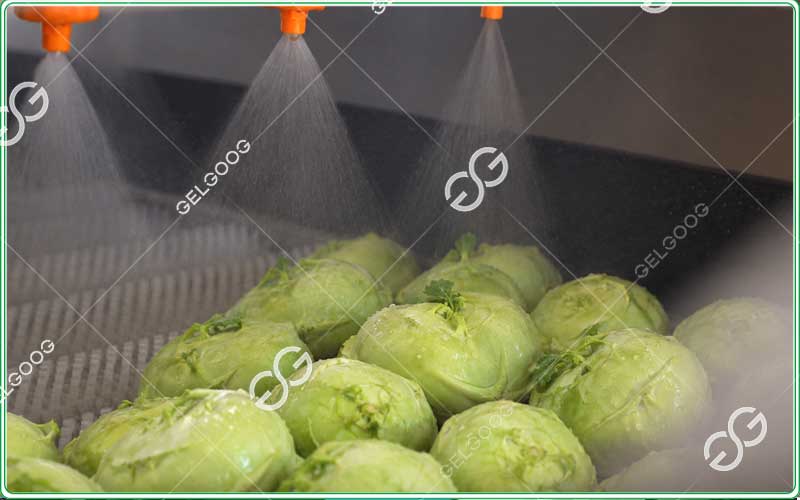
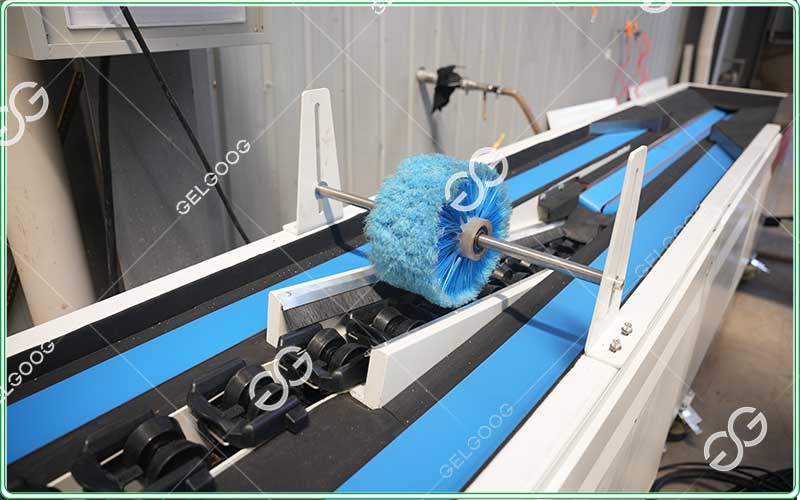
A vegetable washing machine removes soil and surface impurities using water circulation, spray washing, or suitable brushing equipment. The washing method should match the amount of soil, skin condition, and required cleaning standard.
For products with stubborn soil, a brush washing machine can provide additional surface cleaning. Gentle handling helps reduce skin damage during processing.
Step 3: Quality Inspection
An inspection conveyor allows operators to remove split, damaged, discolored, or decayed kohlrabi before grading. This step helps improve the consistency of the final packed product.
Step 4: Electronic Weight Grading
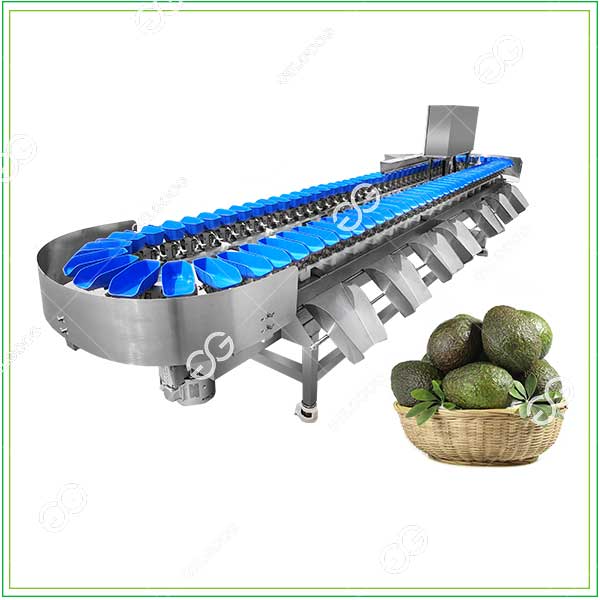
The electronic weight grading machine is the key component for producing uniform commercial grades.
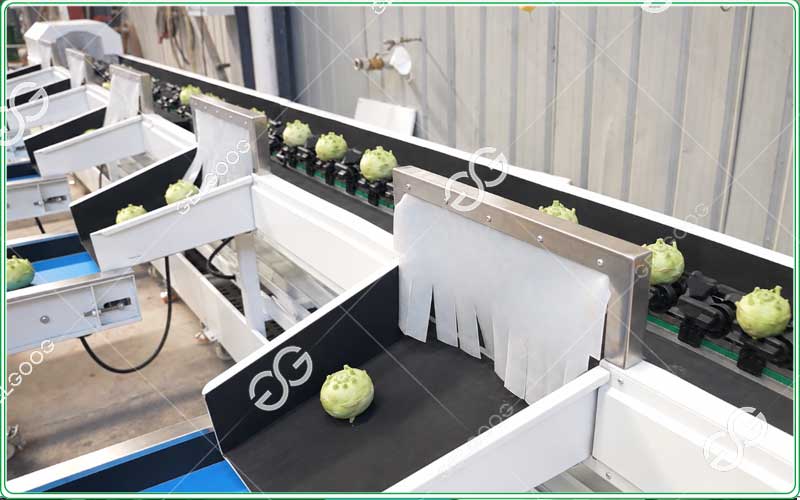
The system weighs individual kohlrabi and assigns each product to a preset weight range. Controlled discharge mechanisms then direct the vegetables into separate collection outlets.
For example, a processor may establish three commercial grades according to buyer specifications:
- Grade A: higher-weight kohlrabi
- Grade B: medium-weight kohlrabi
- Grade C: lower-weight kohlrabi
These categories are illustrative rather than universal standards. Actual weight ranges should be established according to product size, customer requirements, and target markets.
Compared with visual sorting alone, electronic weight grading provides a measurable basis for product classification. It helps packhouses manage product specifications, prepare consistent orders, and reduce the workload associated with manual grading.
Step 5: Collection and Packaging
After grading, separate conveyors transfer each category to collection bins, crates, or compatible packaging stations. An air-drying section can be added when the packing process requires less surface moisture.
Pre-cooling and cold storage can follow where the fresh produce supply chain requires temperature management.
Why Choose an Electronic Weight Grading Machine for Kohlrabi?
For industrial vegetable processors, grading accuracy and consistent output are important when supplying different buyers and retail channels.
- Consistent Weight-Based Classification
- The electronic weighing system sorts kohlrabi using predefined weight thresholds rather than relying exclusively on visual estimates. This approach helps businesses maintain repeatable grading specifications across production batches.
- Flexible Commercial Grade Settings
- Processors can configure different weight categories to match order requirements. The number of grades and weight ranges should be determined by the selected machine configuration and the customer’s sorting objectives.
- Improved Processing Efficiency
- Automated weighing and discharge reduce repetitive manual sorting tasks. When integrated with feeding and collection conveyors, the grader can support a more continuous production workflow.
- Better Control Over Packing Specifications
- Separating kohlrabi by weight helps packing teams prepare different product categories for wholesale, retail, and export orders. Consistent grading also makes it easier to manage inventory by category.
Important note: Weight grading and size grading are not the same. Electronic weight graders sort products based on mass, whereas mechanical size graders typically sort them according to dimensional parameters such as diameter. If you require specific diameter grades, you may need to use appropriate size grading equipment or a combined grading solution.
How to Configure an Industrial Kohlrabi Washing and Grading Line
The right vegetable washing and grading equipment depends on actual operating conditions rather than a standard machine list.
Before selecting a line, industrial buyers should confirm the following:
- Processing capacity: Required throughput in kilograms per hour or tonnes per day.
- Raw material condition: Soil level, product size range, skin condition, and incoming quality.
- Grading criteria: Weight-based categories, diameter ranges, or a combination of both.
- Washing requirements: Water circulation, spray washing, brushing, and water management needs.
- Packaging method: Crates, cartons, bags, or other collection and packing formats.
- Factory conditions: Available floor space, utilities, and integration with existing equipment.
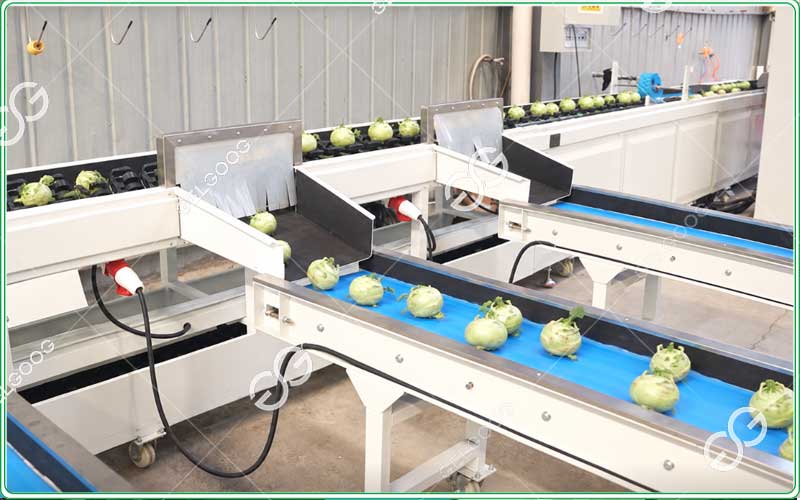
A complete kohlrabi washing and grading system can be configured with feeding conveyors, washing machines, inspection belts, electronic weight graders, and collection equipment. Optional air drying and packaging sections can be added when the application requires them.
For accurate equipment selection, You can provide the target capacity, kohlrabi size range, required weight grades, and packaging specifications.
Frequently Asked Questions
- Can a kohlrabi grading machine sort vegetables by weight?
Yes. An electronic weight grading machine measures individual kohlrabi and separates the product into preset weight categories. The available number of grades and achievable accuracy depend on the selected model and operating conditions. - Can the production line wash and grade kohlrabi in one process?
Yes. A properly integrated line can connect washing, inspection, electronic weight grading, and product collection in one workflow. The exact configuration depends on the required capacity and final product specifications. - Is weight grading better than diameter grading?
Neither method is universally better. Weight grading is suitable when buyers specify weight ranges, while diameter grading is more appropriate when products must meet dimensional requirements. Processors should select the grading method that matches their sales specifications. - What information is needed to select a kohlrabi processing line?
The main requirements are processing capacity, raw product dimensions, washing conditions, grading method, target weight ranges, packaging format, and available factory space. These details help determine the appropriate equipment combination.
Get a Kohlrabi Washing and Grading Solution
GELGOOG helps food and vegetable processing businesses evaluate equipment configurations for their production requirements. A suitable Kohlrabi Washing and Grading Production Line can combine industrial washing with electronic weight sorting to support consistent commercial grades and efficient packing operations.
Contact GELGOOG with your required capacity, target weight categories, and packaging specifications to discuss a suitable line configuration.
Reviews
There are no reviews yet.