
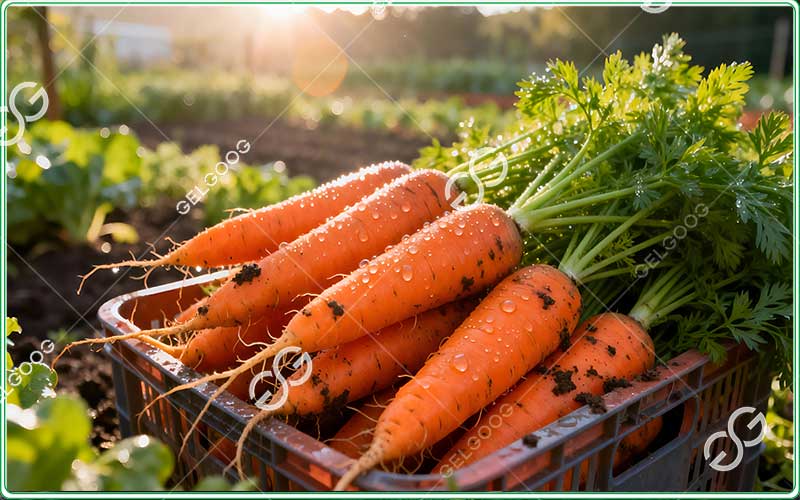
After carrots are harvested, they still carry field heat. If this heat is not removed quickly, carrots can lose moisture, become soft, and experience quality deterioration during storage and transportation. A carrot hydrocooling machine uses chilled water to rapidly remove heat from freshly harvested carrots before storage, packing, or further processing.
For commercial vegetable processors, hydrocooling is therefore more than a simple cooling step. It is an important part of carrot postharvest handling that helps maintain product quality and prepares carrots for subsequent processing.
What Is a Carrot Hydrocooling Machine?
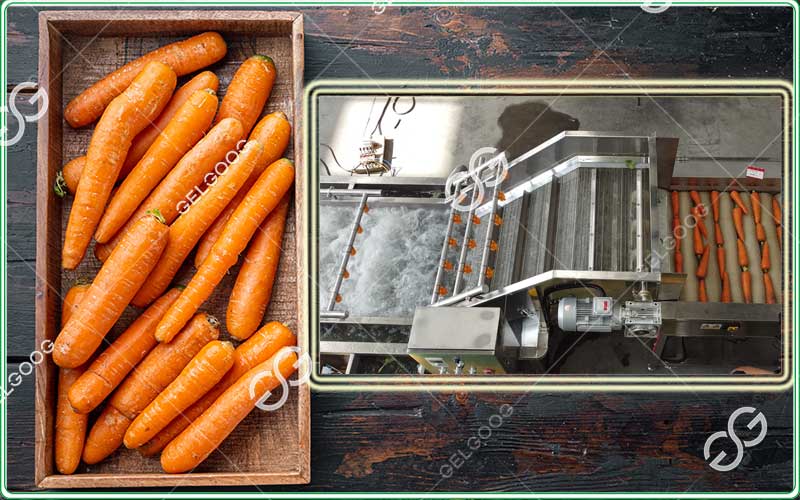
A carrot hydrocooling machine is a postharvest cooling system that brings freshly harvested carrots into contact with cold water. Depending on the equipment design, carrots can move continuously on a conveyor while chilled water is sprayed over the product or pass through a water-based cooling system.
Water transfers heat more efficiently than air, which makes hydrocooling a rapid method for removing field heat from suitable vegetables. Carrots are among the produce products for which hydrocooling can be used.
In commercial applications, the cooling system normally includes a water circulation system, cooling equipment, conveyor, water distribution section, filtration, and temperature control.
What Does Carrot Hydrocooling Do?
1. Removes Field Heat Quickly
Rapidly cools freshly harvested carrots, which keep undergoing physiological changes after harvest. USDA ARS and UC Davis both recommend prompt hydrocooling for postharvest quality.
2. Helps Maintain Freshness
Prevents wilting, shriveling, and rubbery texture from heat and moisture loss. In high-volume processing, a carrot cooling machine sits between harvesting/washing and the next stage.
3. Supports Longer Storage and Transportation
Doesn’t replace refrigerated storage—it removes heat first to prepare carrots for the cold chain. Keeping low temperatures afterward remains essential to minimize quality losses and disorders.
4. Provides More Consistent Cooling
Industrial systems continuously expose carrots to chilled water with controlled conveying speed and cooling conditions—better than manual methods. Performance depends on carrot temperature, water temperature, product size, residence time, and cooling capacity.
Why Combine Cooling With Carrot Processing?
Cooling is often only one stage of a larger carrot processing operation. After washing and cooling, processors may need to separate carrots according to weight, size, or quality before packaging.
GELGOOG’s carrot washing and grading solution integrates washing, weight sensing, grading, and automated product handling. The system uses sensors and PLC-based control to identify carrot weight and distribute products into preset grade channels. This type of downstream equipment can help processors move from postharvest preparation toward standardized commercial packing.
The combination of carrot postharvest cooling equipment and automated handling is especially relevant for vegetable processors supplying supermarkets, foodservice companies, wholesalers, and fresh-produce markets.
What Should You Consider When Choosing a Carrot Cooling System?
Before selecting an industrial carrot cooling machine, processors should evaluate several factors:
- Processing capacity: Determine the required kg/h or tons/h according to harvest volume.
- Initial carrot temperature: Field temperature directly affects cooling demand.
- Target product temperature: Define the required temperature before storage or further processing.
- Cooling water capacity: The refrigeration system must remove the heat transferred from the carrots.
- Residence time: The product needs sufficient contact time to achieve effective cooling.
- Water management: Filtration, circulation, sanitation, and water quality require attention.
- Line integration: Consider how cooling will connect with washing, grading, inspection, and packing equipment.
These parameters are more important than simply choosing a machine based on nominal capacity.
Conclusion
A carrot hydrocooling machine primarily removes field heat from freshly harvested carrots through contact with chilled water. By rapidly reducing product temperature, it supports freshness, moisture retention, storage preparation, and cold-chain transportation.
For a complete commercial carrot operation, cooling should be considered together with washing, quality inspection, grading, and packing. The right combination depends on raw material condition, processing capacity, target temperature, and final market requirements.