
In a fruit production line, “grading” and “sorting” are two distinct yet continuous processes. Understanding their differences is key to optimizing operations, improving quality, and boosting profits.
Key Differences in One Sentence
Grading classifies fruit into commercially valuable grades (e.g., premium, grade one, grade two).
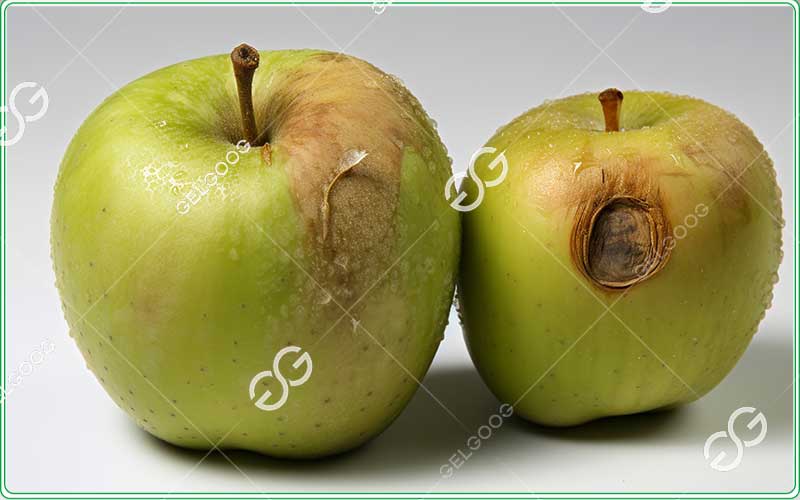
Sorting classifies fruit into acceptable/unacceptable categories based on specific defects.
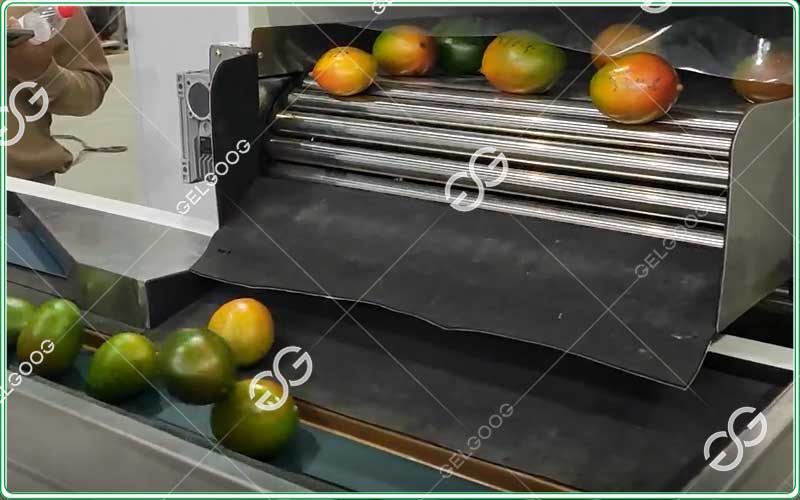
In practice, sorting is the first step, removing unacceptable fruit; grading follows, assessing the value of the remaining fruit.
Sorting: The Gatekeeper of Quality
- Purpose: Inspects and removes defective, unsafe, or low-quality fruit from the production line. It serves as a quality control point.
- Function: Identifies and removes fruit based on defects.
- Criteria: “Is this piece of fruit good enough for further production?”
- Defects: Rot, mold, severe bruises, insect damage, sunburn.
- Contaminants: Stems, leaves, pits, or foreign matter.
- Severe blemishes: Severe deformities, severe undersize.
- Sugar Content (Brix): Sweetness is graded using near-infrared (NIR) technology.
- Color and Appearance: The percentage of red on the apple, i.e., the uniformity of the color.
- Shape and Smoothness: Subtle shape differences that influence consumer perception.
- Technology Used: Optical sorters, laser sorters, and X-ray machines, which use cameras and sensors to detect defects and airflow to remove bad fruit.
Result: A uniform stream of “good” fruit, ready for sorting by value.
How GELGOOG Helps with Intelligent Fruit Sorting
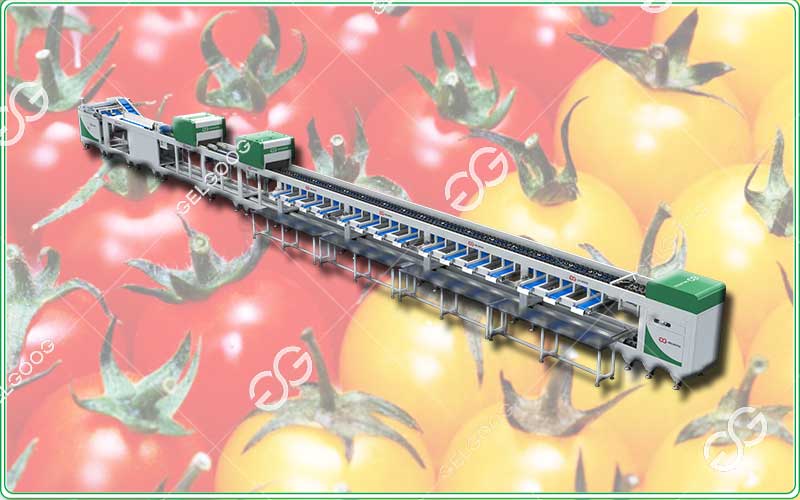
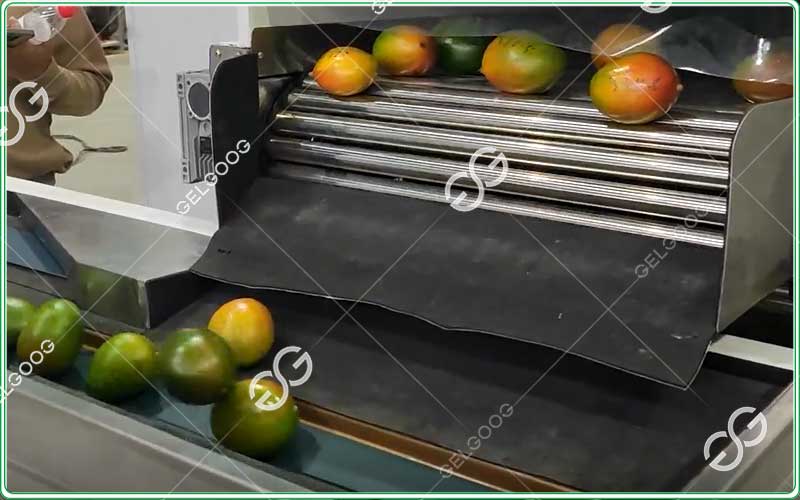
At GELGOOG, our intelligent fruit sorting solutions are designed to remove defective produce with high precision before the grading stage. Equipped with AI vision technology, high-resolution cameras, and advanced optical detection systems, our machines can identify defects such as bruises, decay, insect damage, deformities, and surface blemishes in real time.
Unlike traditional manual inspection, GELGOOG sorting equipment delivers consistent accuracy while significantly reducing labor costs and improving production efficiency.
The system supports a wide variety of fruits, including apples, mangoes, avocados, citrus fruits, pears, kiwis, tomatoes, and more.
It can also be integrated seamlessly into complete fruit washing, drying, waxing, grading, and packaging lines, providing a fully automated post-harvest processing solution for modern packing houses.
Grading: Value allocator
- Purpose: Sort “good” fruit into marketable categories or price classes based on measurable quality attributes.
- Function: Separate acceptable fruit into batches to meet different customer or price requirements.
- Criteria: “What is the quality of this piece of fruit? Which market is it destined for?”
- Size and Weight: Diameter (e.g., 70 mm, 80 mm, 90 mm) or weight class.
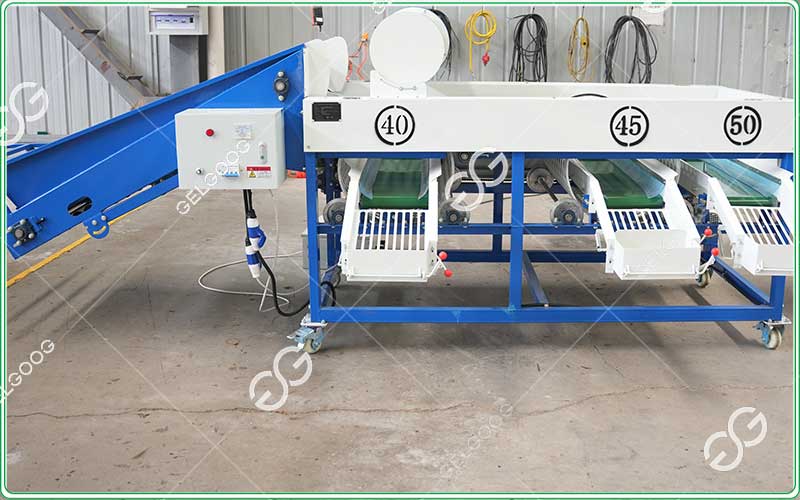
- Technologies used: Weight scales, size graders (drum graders, cup graders), and advanced optical graders equipped with color and internal quality sensors.
The result: Multiple, uniform batches of fruit (e.g., “Export Quality,” “Domestic Retail,” “Processing”), each with different price points.
GELGOOG Fruit Grading Solutions: Maximizing Market Value
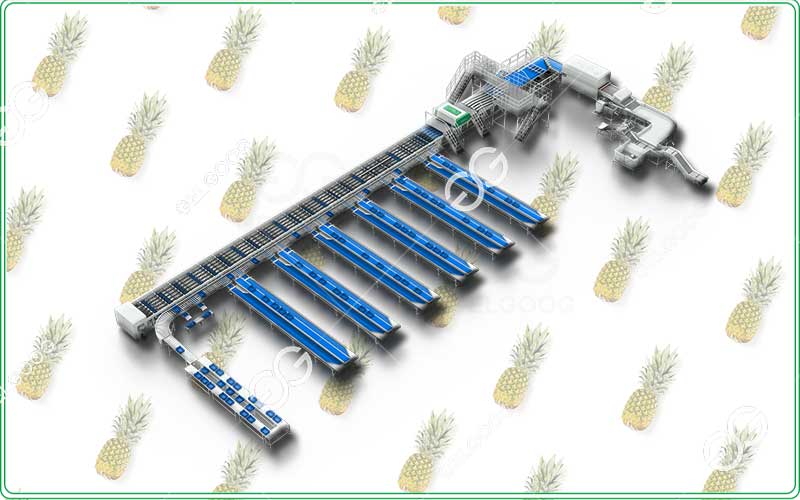
After removing substandard fruit, GELGOOG fruit graders help producers maximize the commercial value of every batch. Our grading systems utilize a combination of weight and size sorting to accurately classify fruit in strict accordance with customer specifications and export standards.
A modular design offers processors the flexibility to customize grading criteria to suit different fruit varieties and market demands.
Whether serving supermarkets, wholesalers, exporters, or food processing plants, GELGOOG grading equipment enhances product consistency and minimizes sorting errors through precise quality classification, ultimately driving higher sales prices.
By integrating our intelligent sorting technology, customers can establish fully automated fruit processing lines, thereby boosting throughput, operational efficiency, and return on investment.
Typical workflow of a fruit production line:
- Unloading and initial cleaning: The fruit is dumped and washed.
- Drying: The fruit is dried to allow the cameras and sensors to function effectively.
- Sorting: A critical step in removing defective fruit (rotten, bruised, contaminated). This ensures the quality of the final batch.
- Grading: Acceptable fruit is sorted by size, color, and sometimes internal quality.
- Packaging: Graded fruit is sent to different packing lines to meet the needs of specific markets.
Sorting is used to remove defective fruit and maintain brand reputation. Grading is used to organize the quality fruit and maximize returns. Investing in the right technology for both steps is crucial for a modern, profitable fruit packing operation.