
Modern potato sorting machines combine efficiency and technology, designed to replace slow and inconsistent manual sorting. Their purpose is to quickly and accurately assess the quality and size of each potato and classify it.
Pain Points of Manual Potato Sorting
Why Traditional Manual Potato Sorting Fails in Modern Processing
- Heavy Soil & Dirt Interference: Freshly harvested potatoes are covered in dirt, mud, and soil clods, making manual visual inspection slow and error-prone.
- High Labor Costs & Operator Fatigue: Hand-sorting tons of dirty potatoes causes rapid worker fatigue, leading to missed defects and inconsistent grading.
- Invisible Internal Defects: Issues like hollow heart, blackheart, or internal rot cannot be detected visually without cutting the potato open.
- High Bruising Rates: Rough manual handling and traditional sorting tables lead to skin abrasion, reducing the shelf life of fresh market potatoes.
Comparison Table: Manual Potato Sorting vs. Automated Sorting Machine
| Feature / Metric | Manual Potato Sorting (人工挑选) | Automated Potato Sorting Machine (设备分选) |
| Throughput Speed | Low (1–2 tons/hr per team) | High (Up to 10–30+ tons/hr per line) |
| Sizing Precision | Subjective estimation by eye | Precise weight / millimeter-level diameter sizing |
| Defect Detection | Surface-level only (misses green skin/rot) | Detects skin blemishes, greening, scab & shape deformation |
| Internal Inspection | Impossible | Non-destructive NIR/X-Ray detection for internal rot & hollow heart |
| Labor Reduction | Requires large seasonal workforce | Cuts labor dependency by 70%–80% |
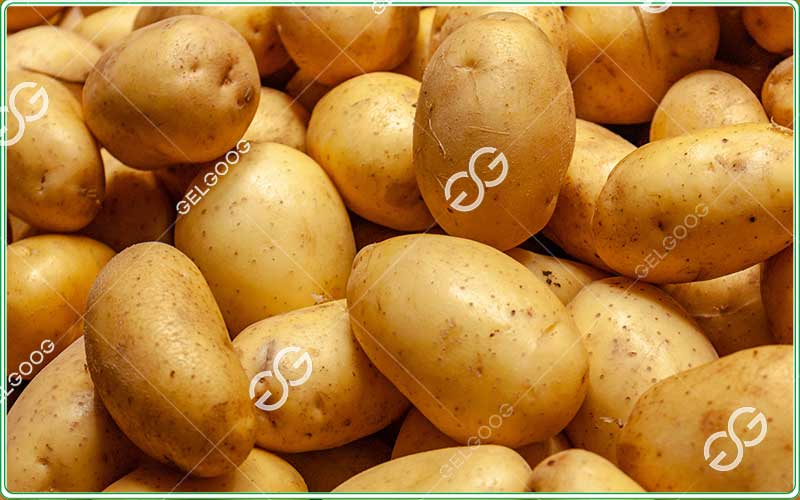
Step-by-Step Working Principle of a Potato Sorting Machine
A modern industrial potato sorting machine automates the post-harvest workflow from dirt removal to final packaging through four synchronized stages:
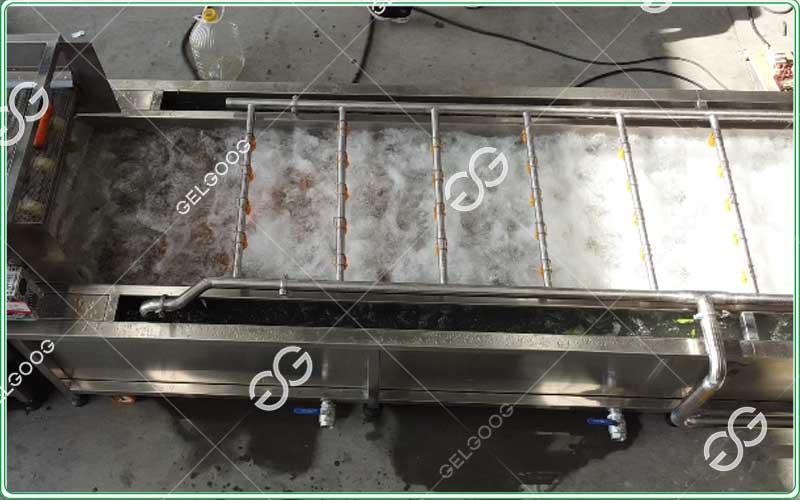
Step 1: Soil, Mud & Clod Removal (Pre-Cleaning)
Before optical or weight inspection, potatoes pass through roller dirt screeners or star-wheel de-clodders. Soil, clods, and field debris are separated to prevent sensor interference and equipment wear.
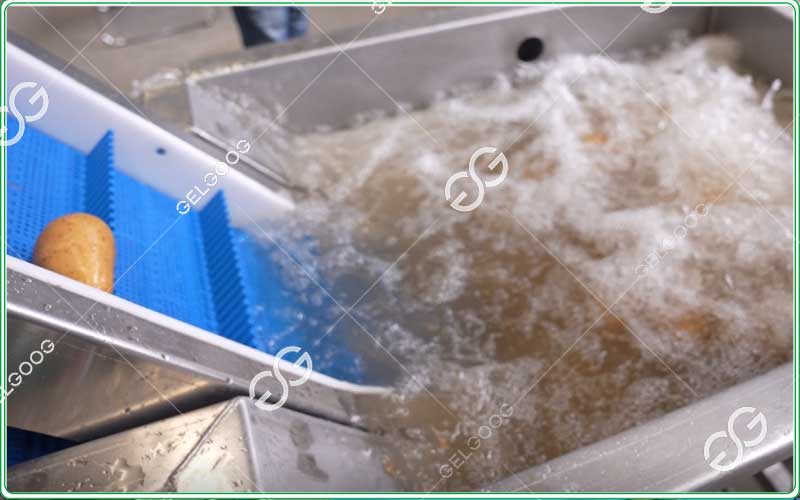
Step 2: Singulation and Gentle Conveying
Potatoes are transferred onto specialized v-belt or cup conveyors. The system singulates the potatoes (arranging them into single-file lines) while gently rotating each potato 360 degrees for comprehensive scanning without skin abrasion.
Step 3: Multi-Sensor & AI Vision Scanning
As potatoes pass through the inspection chamber, multiple advanced sensors collect data in milliseconds:
- High-Definition Optical Cameras: Capture 360-degree high-speed images to measure length, diameter, shape ratio, and surface defects.
- AI Image Algorithms: Identify green skin, growth cracks, scab, wireworm damage, and mechanical bruises.
- Near-Infrared (NIR) / X-Ray Sensors: Inspect the internal density to detect hollow heart, internal blackening, and dry matter content without damaging the potato.
Step 4: High-Speed Pneumatic Ejection & Grading
Based on preset grading parameters (e.g., Size Class A/B/C, Premium Fresh, or Processing Grade), high-speed air jets or soft-touch mechanical pushers gently divert each potato into its designated discharge lane.
Main Types of Potato Sorting Equipment
Depending on your production capacity and end-use application, different sorting technologies are deployed:
How It Works: Combines optical cameras and deep-learning software to sort by size, color, and external defect simultaneously.
Mechanical Roller & Mesh Screen Sizers
Best For: Basic size sorting immediately after harvest.
How It Works: Uses rotating roller gaps or mesh screens to grade potatoes purely by physical dimensions.
Electronic Weight Potato Sorting Machines
Best For: Precise weight-based packing for fresh retail markets.
How It Works: High-speed load cells weigh each unit accurately to ensure uniform box weights.
AI Optical & Vision Sorting Machines
Best For: High-capacity processing lines requiring defect removal, color grading, and shape classification.
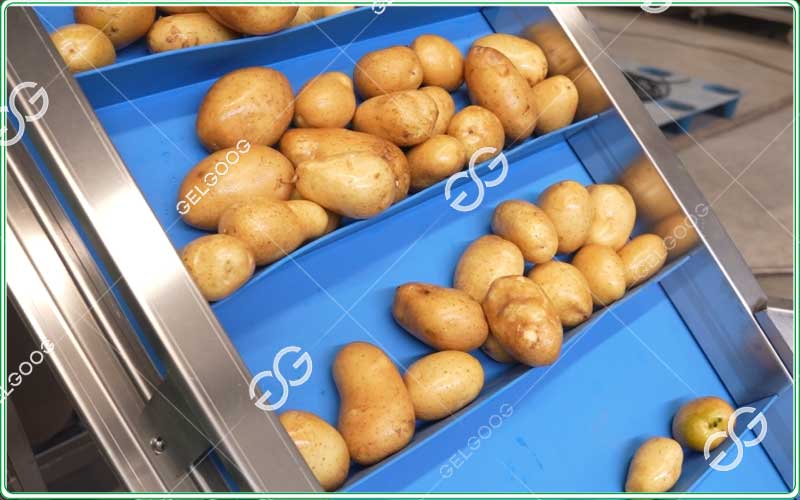
Sorting and Grading Machine
While the primary goal is typically to remove defective potatoes, these machines can also perform active sorting:
- Quality Grading: Separates premium potatoes, retail potatoes, and processing potatoes.
- Size Grading: The system uses size data captured by the cameras to trigger different ejectors, directing potatoes to different channels based on diameter (e.g., for small fries and large fries).
The final output is several streams of potatoes: a high-quality, uniform main stream, and separate streams for defective products and potatoes of varying sizes/quality grades.
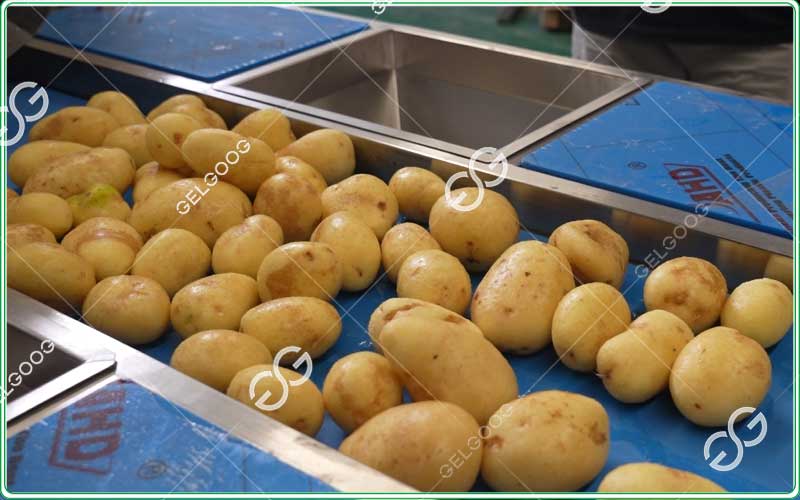
Modern potato sorting machines offer the following advantages:
- Speed and efficiency: They can process several tons of potatoes per hour, far exceeding manual labor.
- Accuracy and consistency: They are free of fatigue or subjectivity; the same quality standards are applied 24/7.
- Reduced waste: Defective material is precisely located, increasing overall yield and profit.
- Data insights: Many machines provide defect rate and yield data, helping to optimize the entire supply chain.
Key Applications in Fresh Market & Potato Processing
- Fresh Table Potatoes (Supermarket Retail): Requires pristine skin appearance, zero greening, exact count/weight packaging, and smooth surfaces.
- French Fry & Potato Chip Processing: Focuses on high dry matter content, uniform length, removal of internal defects (blackheart), and zero sugar ends.
- Seed Potato Grading: Demands precise size classification (e.g., 28–35mm, 35–55mm) to ensure uniform planting density and yield predictability.
Essentially, they act like automated, highly accurate quality inspectors, ensuring that only the highest-quality products reach the packaging line or the next processing stage.
Conclusion
Modernizing your post-harvest potato processing line with an automated sorting machine eliminates labor bottlenecks, reduces product waste, and guarantees strict quality consistency for demanding retail and industrial buyers.
Optimize Your Potato Processing Line Today Looking for a customized potato sorting and grading solution? Contact Gelgoog’s engineering team today for a free technical proposal and line design.