



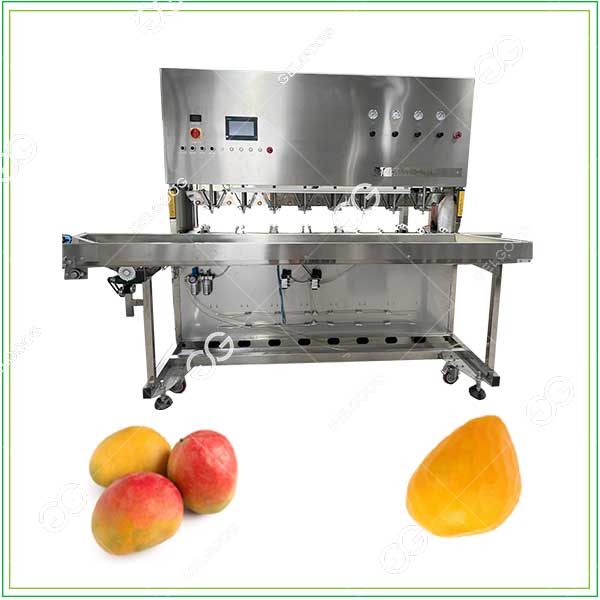
A mango washing and peeling machine is an integrated industrial solution designed to clean, sanitize, and remove the skin from mangoes in a single continuous workflow. At GELGOOG, we engineer industrial mango washing and peeling machines that combine multi-stage bubble washing, high-pressure spray rinsing, and precision peeling technology to deliver ready-to-process fruit for juice factories, dried mango production lines, IQF freezing plants, and fresh-cut fruit packers.
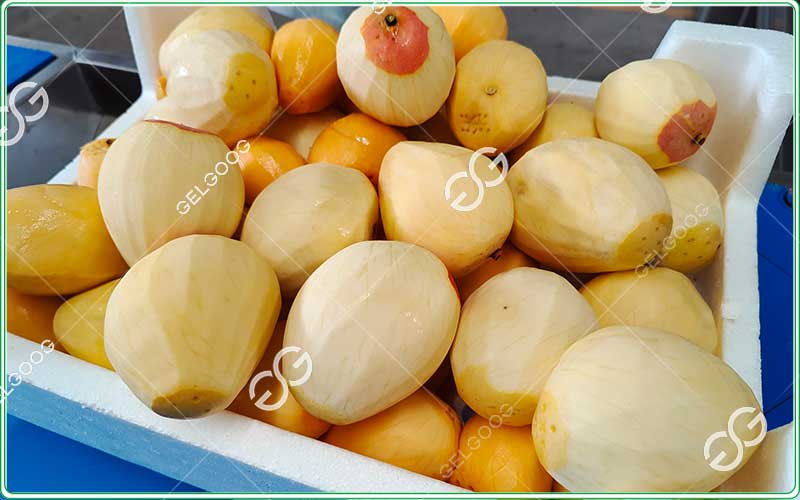
What Is a Mango Washing and Peeling Machine?
-
Washing – Removes surface dirt, pesticide residues, pectin, and microbial contaminants using bubble tumbling and high-pressure water spray.
-
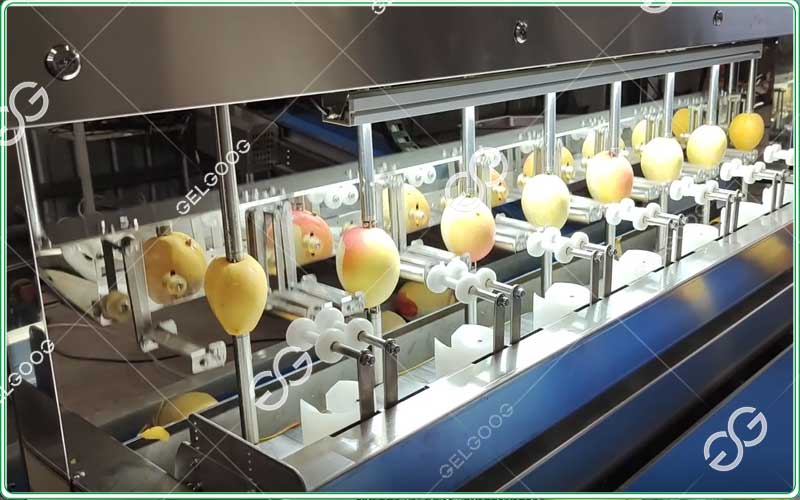
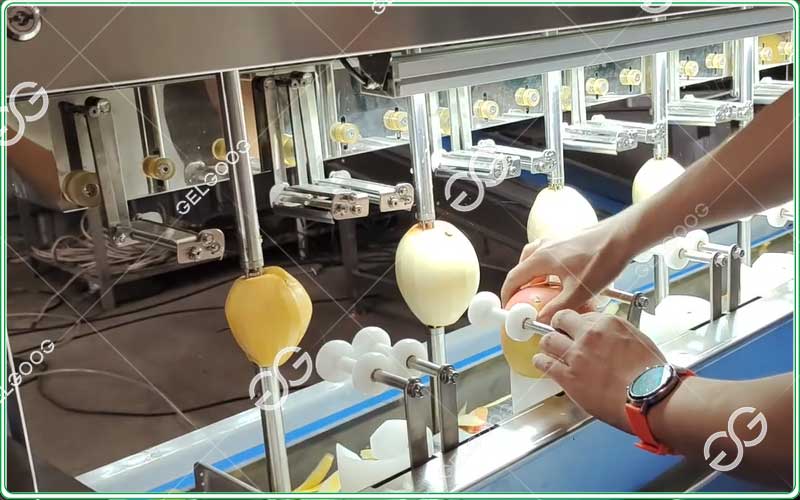
Peeling – Uses contour-adaptive blades or rotary peeling systems to remove mango skin with minimal pulp loss.
Key Features of Industrial Mango Washing and Peeling Machines
1. Three-Stage Cleaning System
-
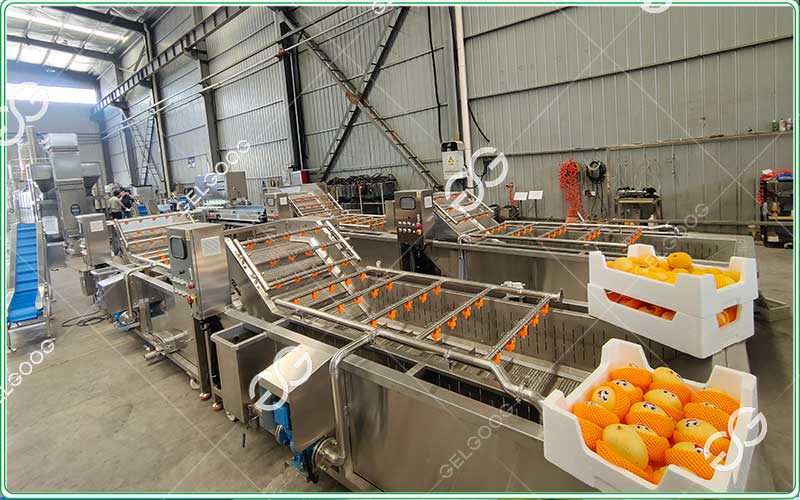
Brush pre-wash – Food-grade flexible rollers remove mud and stem debris without bruising the peel.
-
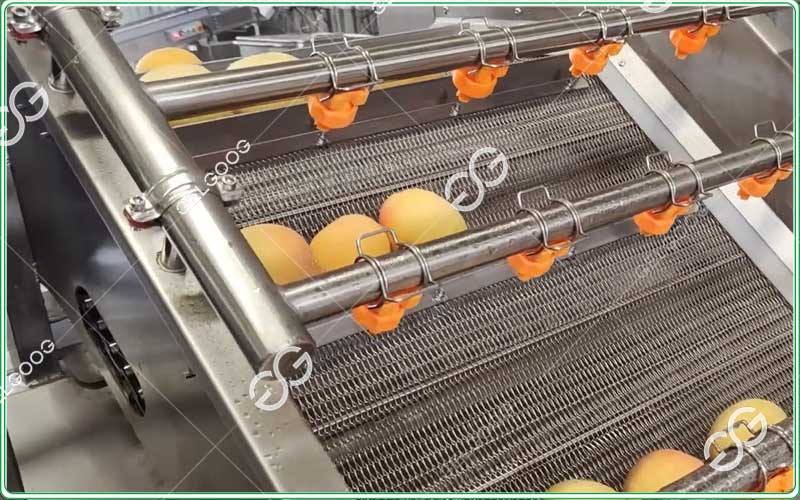
High-pressure spray – Multi-angle nozzles rinse away fine dirt and dilute water-soluble pesticide residues.
-
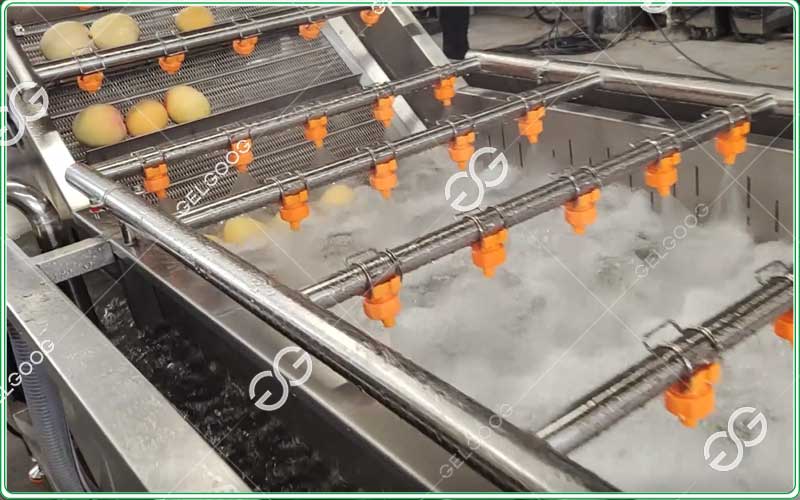
Bubble tumbling wash – Microporous aerators generate dense bubbles that create 360° gentle agitation, eliminating pectin and sticky impurities.
2. Precision Peeling Technology
-
Adjustable peeling thickness (1–3 mm) to minimize pulp loss.
-
Processing capacity up to 1,000 pieces per hour.
-
Compatibility with mango varieties ranging from 80 g to 2,000 g.
3. Food-Grade Construction
-
SUS304/SUS316 contact surfaces for acid resistance and hygiene.
-
Modular design for fast disassembly and CIP (Clean-In-Place) maintenance.
-
IP65-rated electrical enclosures suitable for wet processing environments.
Mango Washing and Peeling Machine Work
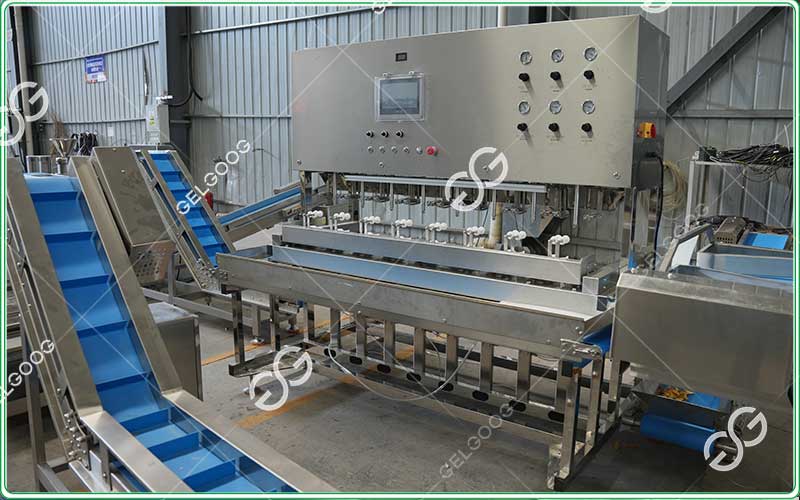
- Loading: Fresh mangoes are fed onto a buffer conveyor or loaded manually into the washing tank.
- Bubble Washing: An air pump injects high-pressure air into the water tank, creating turbulent bubbles that lift and tumble the fruit for comprehensive surface cleaning.
- High-Pressure Rinse: As mangoes travel along the mesh belt elevator, fan-shaped nozzles deliver a secondary spray rinse from multiple angles.
- Peeling: Clean mangoes enter the peeling station, where sensors detect fruit height and diameter. Rotary blades trace the fruit contour to remove skin uniformly.
- Discharge: Peeled mangoes exit via a stainless steel conveyor, ready for slicing, dicing, pulping, or direct packaging.
Applications of Mango Washing and Peeling Machines
-
Fresh-Cut Fruit Industry – Produces ready-to-eat mango cups and supermarket fruit salads with uniform appearance.
-
Frozen Mango Processing – Supplies IQF mango cubes and slices that require consistent size for even freezing.
-
Mango Juice & Puree Production – Delivers clean, peeled fruit to pulping lines, improving extraction efficiency.
-
Dried Mango Manufacturing – Ensures hygienic pre-treatment before slicing and dehydration.
-
Catering & Central Kitchens – Reduces manual prep time for large-scale food service operations.
Benefits of Using an Automatic Mango Washer and Peeler
-
Labor Cost Reduction – One automated unit replaces 5–8 manual workers, lowering long-term payroll expenses.
-
Waste Minimization – Precision peeling systems achieve over 95% yield by reducing pulp loss.
-
Hygiene Compliance – Closed-system washing with optional ozone sterilization meets export-grade food safety standards.
-
Throughput Scaling – Process 500 kg/h to 3,000 kg/h continuously without interruption.
-
Water Recycling – Built-in three-stage filtration recycles over 85% of wash water, cutting utility costs.
How to Choose the Right Mango Washing and Peeling Machine
-
Production Capacity – Match hourly output to your target volume (e.g., 500 kg/h for small workshops; 2,000+ kg/h for industrial plants).
-
Mango Variety & Size – Verify that the machine accommodates your fruit diameter range and skin thickness.
-
Automation Level – Choose semi-automatic models for budget flexibility or fully automatic lines for continuous production.
-
Integration Needs – Consider whether you require a standalone unit or a complete mango processing line with sorting, cutting, and packaging modules.
Mango Washing and Peeling Machine Price
-
Production capacity (500 kg/h vs. 3,000 kg/h)
-
Level of automation (semi-automatic vs. PLC-controlled)
-
Additional features (ozone sterilization, water recycling, custom conveyor length)
FAQ
What is the difference between a mango washing machine and a mango peeling machine?
A mango washing machine cleans surface contaminants using bubbles and spray. A mango peeling machine removes only the skin. GELGOOG’s integrated mango washing and peeling machine combines both functions into one continuous line, saving floor space and labor.
Can the machine handle different mango sizes?
Yes. Our equipment uses adjustable brush spacing, variable conveyor belts, and auto-sizing peeling blades to process mangoes from 80 g to 2,000 g, covering varieties such as Alphonso, Kent, Tommy Atkins, and Keitt.
Does the washing process damage the mango peel or affect ripeness?
No. The bubble tumbling system uses gentle water agitation with controlled room-temperature washing cycles (2–3 minutes). The damage rate remains below 0.5%, preserving fruit integrity and ripeness.
Why Choose GELGOOG as Your Mango Washing and Peeling Machine Manufacturer?
-
Custom Engineering – Tailored machine dimensions, capacity, and line configurations.
-
Global Installation – On-site setup and commissioning in over 120 countries.
-
24/7 Technical Support – Remote diagnostics and rapid spare parts dispatch.
-
Proven ROI – Clients report up to 60% reduction in processing time and 40% lower labor costs within the first year.
Ready to upgrade your mango processing line? Contact GELGOOG today for a free consultation, detailed quotation, and customized layout design for your facility.
Reviews
There are no reviews yet.