



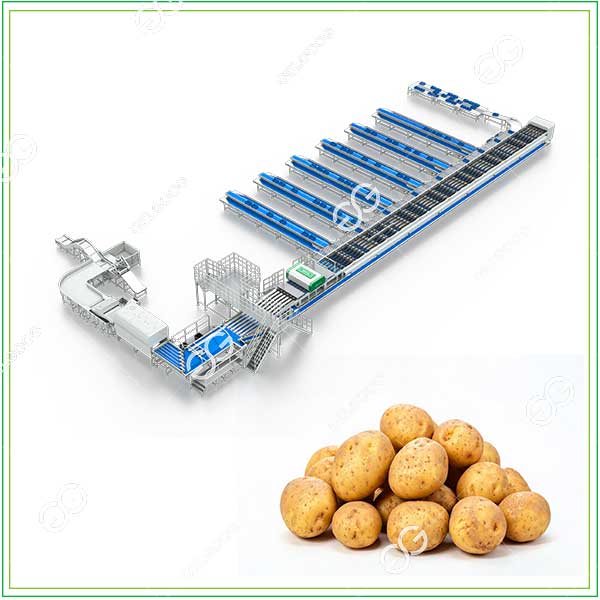
GELGOOG’s optical potato sorting machine helps industrial potato processors identify and separate defective potatoes and unwanted foreign materials before further processing or packing. Using a configurable machine vision system, the equipment can inspect visible surface characteristics and sort potatoes according to preset quality standards.
Designed for fresh potatoes, the system can be configured for washed or unwashed raw materials, depending on the inspection technology and processing environment. Optional sensor configurations, including near-infrared (NIR) detection, can be evaluated for projects that require additional inspection capabilities.
What Is an Optical Potato Sorting Machine?
An optical potato sorting machine is an automated inspection system that uses cameras, optical sensors, image-processing software, and a sorting mechanism to identify potatoes that do not meet predefined quality requirements.
Unlike a conventional potato grading machine that primarily sorts by size or weight, an optical potato defect sorting machine focuses on visual quality, surface abnormalities, and selected foreign materials. Depending on the configuration, it can also support shape classification and additional sensor-based inspection.
Key functions include:
- Green potato detection: Identifies green discoloration associated with chlorophyll development.
- Rot and surface defect detection: Identifies visible rot, dark spots, and other selected surface abnormalities.
- Mechanical damage inspection: Detects configured defect types such as bruises, cracks, cuts, and damaged skin.
- Shape inspection: Identifies potatoes with irregular shapes or dimensions outside preset criteria.
- Foreign material separation: Helps remove stones, soil clods, and other identifiable foreign objects when the selected sensor system supports these materials.
- Optional advanced inspection: NIR or other specialized detection technology can be evaluated when a project requires capabilities beyond standard surface inspection.
Actual detection performance depends on potato varieties, surface conditions, defect characteristics, sensor configuration, and operating parameters.
How the Optical Potato Sorting Machine Works
The automatic potato defect sorting process follows four main stages.
Step 1: Feeding & Distribution
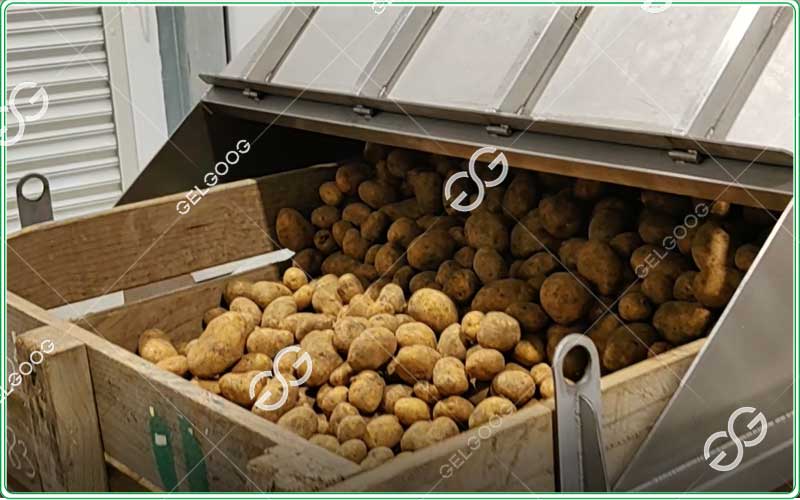
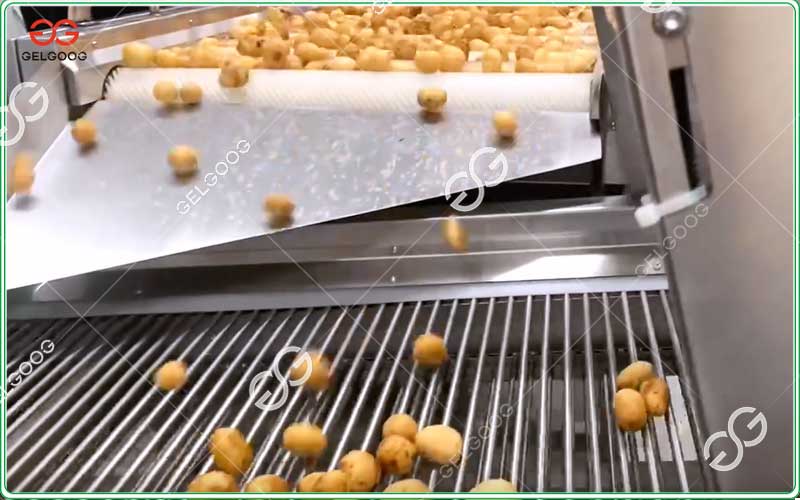
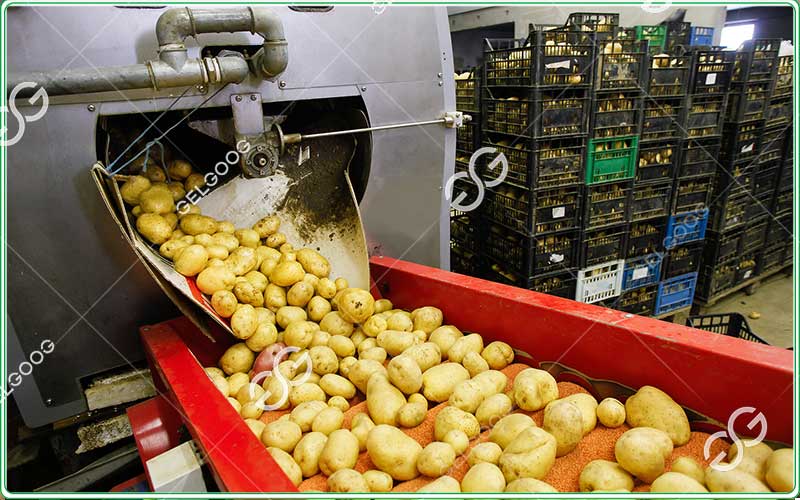
Feeding conveyor moves potatoes in; distributor spreads them to reduce overlap for proper inspection. For unwashed potatoes, feeding must handle soil, stones, and debris without blocking flow.
Step 2: Optical Inspection & Image Acquisition
Cameras and optical sensors capture color, shape, and visible surface data. Advanced projects can add more sensors. Mud, soil, moisture, and overlap can affect defect visibility.
Step 3: Defect Recognition & Sorting Decisions
The image-processing system compares data with preset criteria and sorts potatoes into accepted/rejected groups. Operators can adjust criteria for fresh packing, chips, fries, or other uses.
Step 4: Automatic Rejection and Discharge
The sorting mechanism sends identified defective potatoes and foreign materials to designated outlets. Accepted potatoes move on to the next stage.
Depending on line design, these can be integrated before or after optical inspection:
-
Pre-cleaning and soil removal equipment
-
Potato washing and brushing machines
-
Size and weight grading equipment
-
Inspection conveyors and collection bins
-
Cutting, peeling, or further processing equipment
Washed vs. Unwashed Potato Optical Sorting
An industrial potato optical sorter can be configured for different handling stages. Inspection position and sensor selection should match the incoming material.
Sorting Unwashed Potatoes
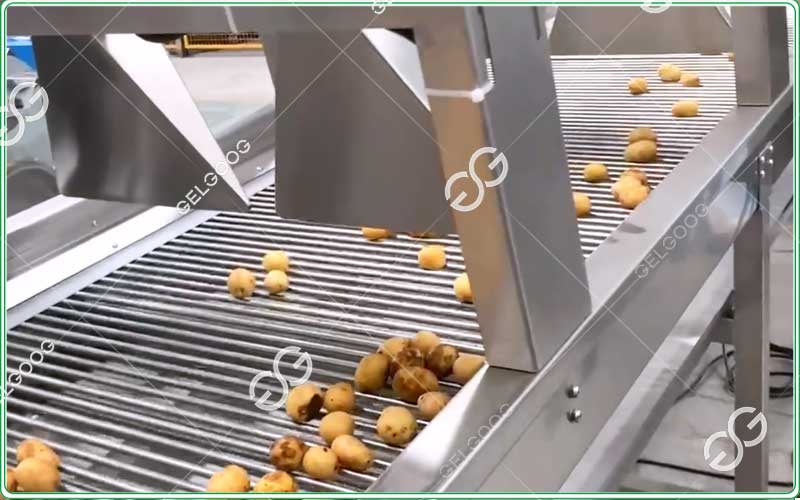
Unwashed potatoes often contain soil, stones, and clods. Optical sorting at this stage can remove identifiable foreign materials and selected visible defects before downstream cleaning. The design should account for dust, mud, variable surface moisture, and protection of optical components.
Sorting Washed Potatoes
Washed potatoes give a clearer surface for inspecting green discoloration, rot, cracks, and other visible defects. A post-washing optical sorter can improve the quality of potatoes entering cutting, packing, or further processing. The inspection system should be designed for the actual moisture level and surface condition of the product.
How to Choose an Industrial Optical Potato Sorting Machine
Before selecting a potato sorting and defect removal system, buyers should define their production requirements and inspection priorities.
| Selection factor | Information to confirm |
|---|---|
| Processing capacity | Required throughput in kg/h or t/h |
| Raw material | Potato variety, size range, and surface condition |
| Feeding condition | Washed, unwashed, dry, or wet |
| Target defects | Green skin, rot, cracks, bruising, deformities, stones, or soil clods |
| Detection technology | Color cameras, machine vision, NIR, or other validated sensors |
| Internal inspection | Specific internal defects requiring non-destructive detection |
| Sorting outputs | Accepted potatoes, defective potatoes, and foreign materials |
| Integration | Existing conveyors, washing equipment, grading machines, and downstream processing |
| Installation conditions | Available floor space, power supply, operating environment, and maintenance access |
For a reliable evaluation, provide representative potato samples or images, the expected defect types, the required throughput, and the desired rejection criteria. A supplier can then assess the suitable configuration and arrange material testing where appropriate.
FAQ

Reviews
There are no reviews yet.